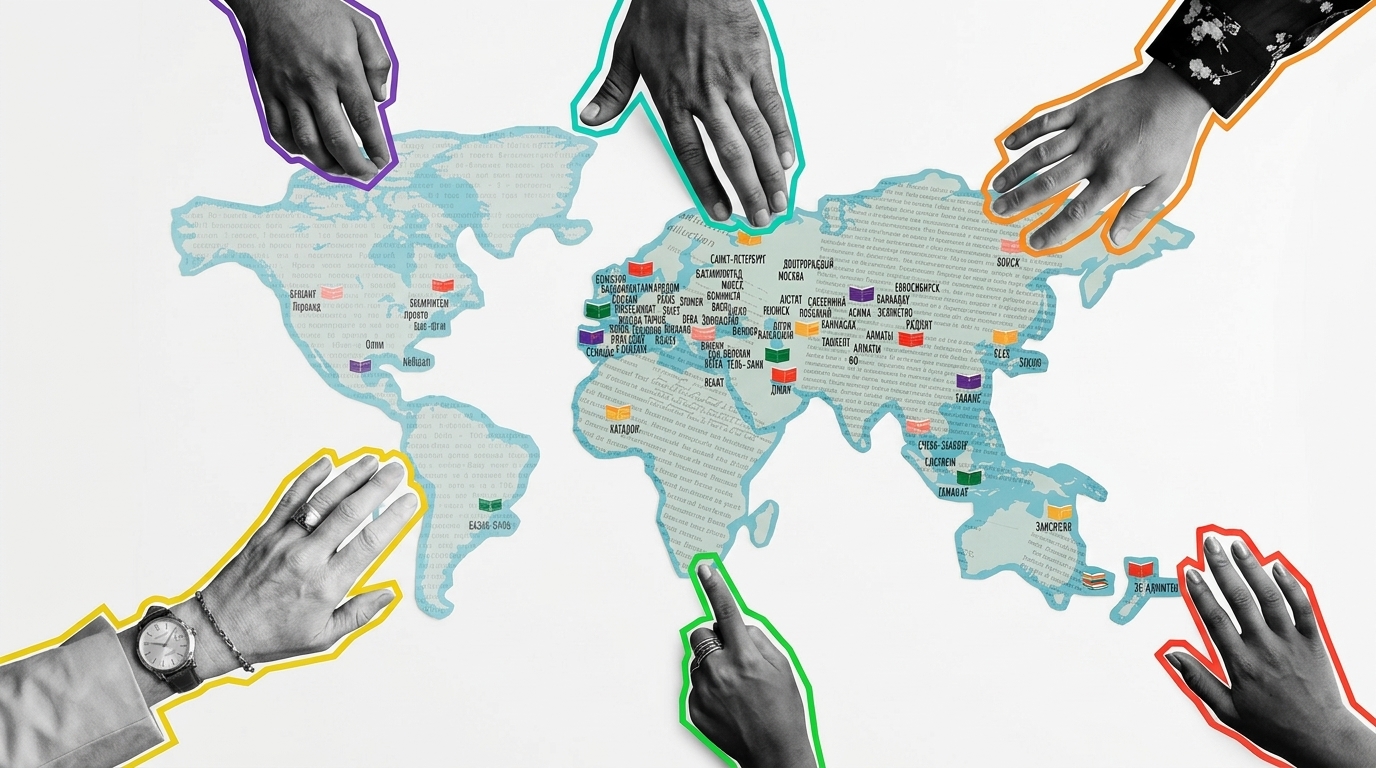
This specialization provides an integrated academic training that combines the depth of theoretical analysis with the rigor of field research. It aims to qualify researchers and specialists capable of understanding the complex relationships between media, society, and culture. Falling within the scope of interdisciplinary fields, this specialization utilizes the tools of sociology, anthropology, and semiology to analyze contemporary media and communication phenomena.
This Master’s program seeks to equip students with critical and methodological tools enabling them to deconstruct media discourse, understand the mechanisms of meaning-making in digital societies, and respond to the challenges of artificial intelligence and contemporary mass culture. Furthermore, it trains future researchers in media and communication sciences by providing them with a solid foundation of theoretical and practical knowledge essential for understanding the diversity and divergence of media messages.
Core Areas of Training
Cognitive and Critical Empowerment
Equipping students with theoretical backgrounds in sociology, anthropology, and critical analysis to understand and interpret media phenomena.
Digital Media and Artificial Intelligence
Studying the transformations brought about by digital platforms and artificial intelligence on social bonds, communication patterns, and cultural identity.
Identity, Culture, and the Public Sphere
Analyzing the relationship between media globalization, cultural specificities, and social representations in the contemporary public sphere.
المنهجية وأدوات البحث
إتقان أدوات البحث الكيفي والكمي: الإثنوغرافيا الرقمية، تحليل الخطاب، وبرامج SPSS وNvivo وMaxQda.
Professional and Academic Horizons
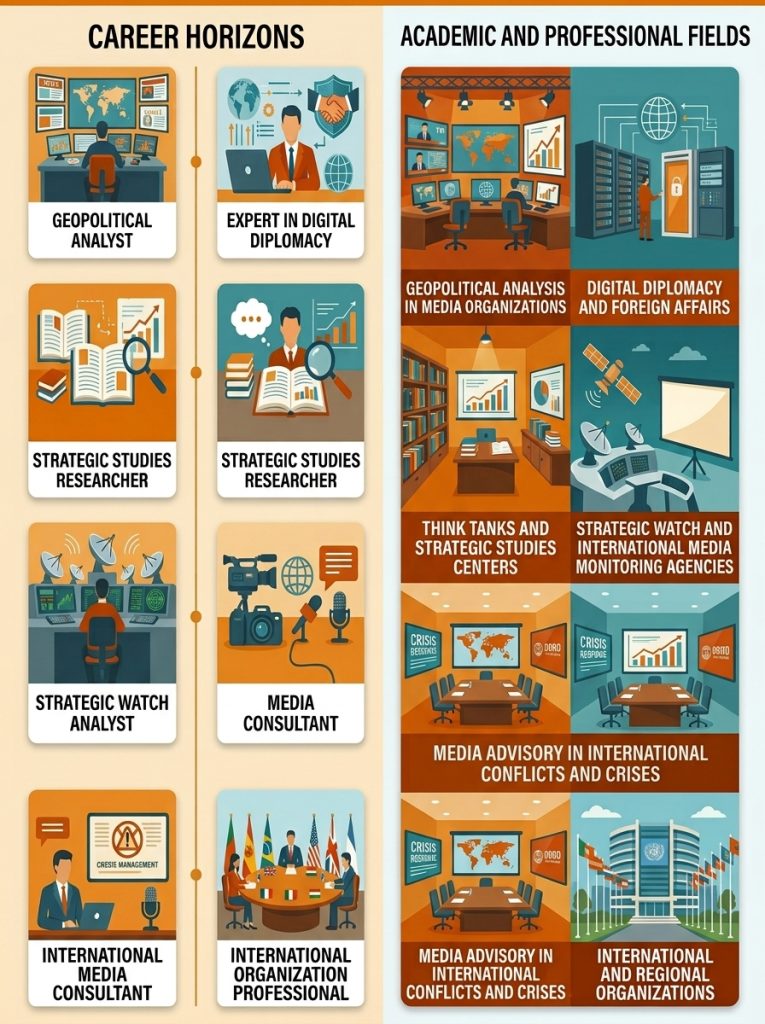
This specialization enables graduates to pursue doctoral studies in media and communication sciences or political science. It also opens career opportunities in:
International and National Media Institutions: As experts in geopolitical analysis.
Ministries of Foreign Affairs and Digital Diplomacy.
Research Centers and Strategic Studies Institutes.
Strategic Vigilance and International Media Monitoring Bodies.
Media Consultancy in international conflicts and crises.
Admission to this Master’s degree program is subject to specific academic requirements, and acceptance is granted through a competitive selection process following an evaluation of the candidate’s application file.
Admission Requirements:
Admission is based on a national competitive written examination. It is open to candidates holding a Bachelor’s degree (Licence) in Media and Communication Sciences. Graduates from other relevant disciplines (such as Sociology, Anthropology, Literature, and Humanities) may also participate, subject to specific conditions determined by the competition jury.
Registration and Enrollment: Via the national university orientation platform or the official website of the National Higher School of Journalism and Information Sciences.
Training Program
To review the course modules, pedagogical objectives, and academic regulations, please download the complete training program.