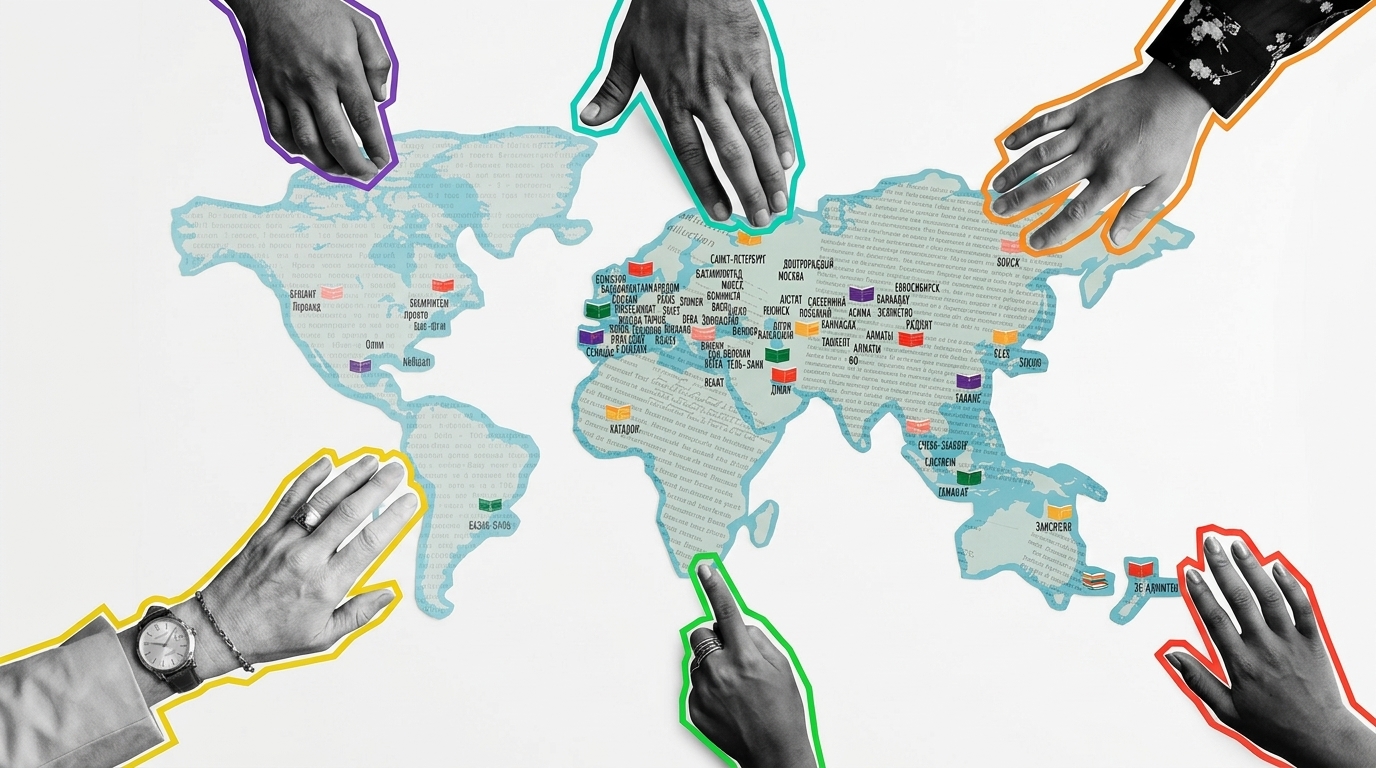
This program is aligned with the current demands of the Algerian media and communication labor market, where there is an emerging need for media professionals specializing in international media. This comes in response to modern technologies that have redefined the concept of power in international relations. Geopolitical influence is no longer the exclusive domain of conventional military capabilities; it has shifted to “cyberspace” and the realm of the “international flow of information,” giving rise to what is known today as the geopolitics of media.
This Master’s program seeks to establish an innovative pedagogical approach by training academic elites capable of deconstructing the “architecture of power” wielded by media empires and transnational digital platforms. The framework of this curriculum goes beyond the classical description of media phenomena, delving deep into the study of media as an instrument of hegemony or liberation, and as a fundamental factor in “hybrid warfare” and “digital diplomacy.” By integrating media sciences with political and strategic sciences, this Master’s degree equips students with the necessary analytical tools to understand how international legitimacy is manufactured across screens, and how crises are managed within a turbulent media environment characterized by the supremacy of algorithms and the influx of fake news.
Core Curriculum Pillars
Enabling the Analytical Reading of Global Events
Equipping students to analyze international conflicts (such as the Middle East conflict or the US-China rivalry) from a purely media-centric perspective.
Developing a Capacity for Strategic Critique
Moving beyond a superficial reading of the news toward deconstructing the underlying agendas—identifying who funds, who directs, and why at this specific juncture.
"Soft Power"
Studying how nations utilize cinema, sports, and digital content to enhance their international public image.
Strategic Foresight and Geopolitical Monitoring
Preparing qualified professionals equipped with geopolitical monitoring skills, capable of formulating tactical and influential media discourse amidst ongoing international conflicts.
Career and Academic Prospects
Here is the professional academic translation for this section, maintaining standard university prospectus terminology:
English Translation
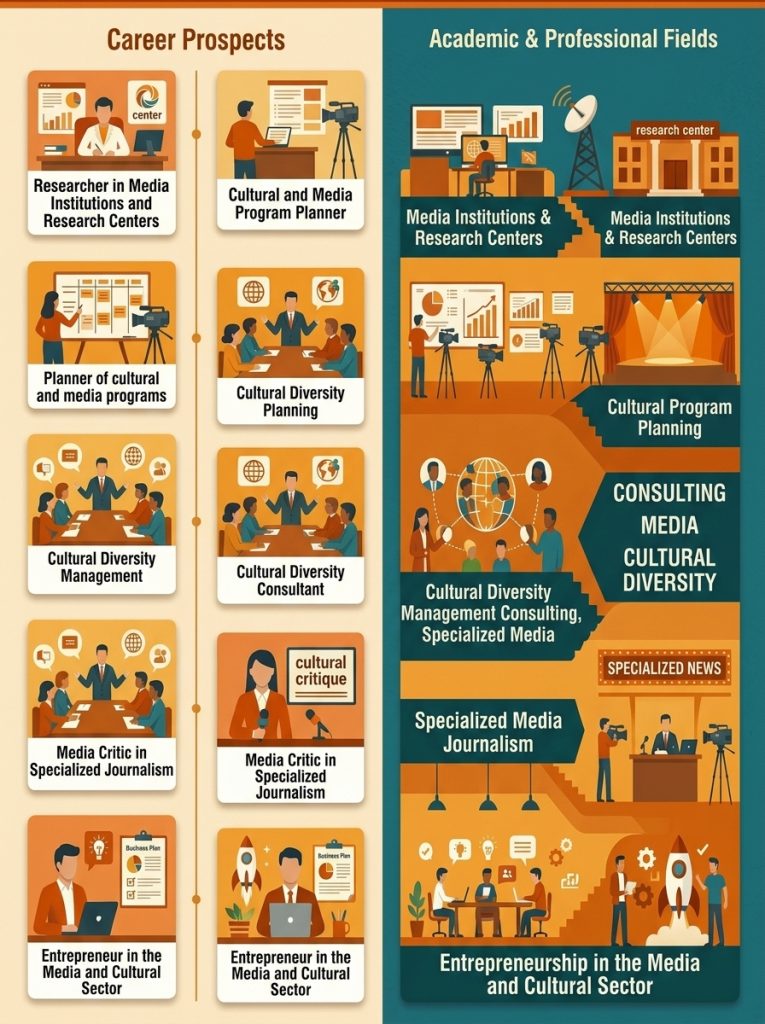
This specialization enables its graduates to pursue a PhD pathway in Media and Communication Sciences or Cultural Sociology. It also opens up career opportunities for them to work as:
Researchers in media institutions and research centers
Admission to the Master’s program is subject to specific academic requirements, and acceptance is granted via a competitive selection process following a comprehensive review of the applicant’s dossier.
Admission to this Master’s program is granted through a national competitive entrance examination (written exam), open to holders of a Bachelor’s degree (Licence) in Media and Communication Sciences (all specializations). Participation is also extended to graduates holding degrees in other related disciplines (Sports Sciences and Physical Education, Management, Law, International Relations, and Information Technology), subject to conditions determined by the examination committee.
Registration & Enrollment ➔ Via the university orientation platform or the official website of the National Higher School of Journalism and Information Sciences.
Course Curriculum
To review the course modules, pedagogical objectives, and academic structure, please download the complete curriculum program.